Tents for Life, Not the Landfill — Where It Came From and Why It Matters
It was summer August 2009 and I was standing in a field at the Green Man Festival in Wales, at the end of a very long shift as Recycling Coordinator, staring at something that broke my heart.
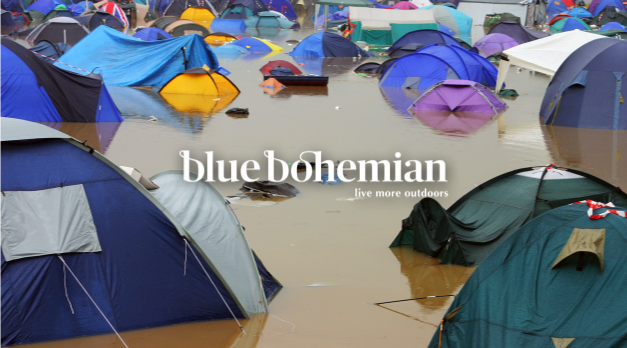
A company called Tangerine Dreams had imported cheap nylon tents for a budget glamping option. What was left behind when the festival ended was a mountain — literally a mountain — of tangerine-coloured waste. Shredded sleeping bags. Collapsed nylon. Everything sodden from the rain. Piled high, going nowhere.
I was riding around on a golf buggy with my colleague John Love — one of those wonderful, grey-haired, young-at-heart people who take you under their wing at exactly the right moment in your life. John’s blood pressure was going up. Mine was going in the same direction.
I made a vow that day. I would do something to rid the festival scene of disposable waste. And I found six words to say it: Tents for Life, Not the Landfill.
WHAT CAME BEFORE
I hadn’t arrived at that festival by accident. I’d spent years in the UK working in PR and film after the GFC — tough going, like it was for most people. But I kept finding my way back to festivals. Back to canvas. Back to the question of why the outdoor industry kept making things designed to be thrown away.
I’d watch people like Tobyn Cleeves of Bell Tents UK looking effortlessly cool, pulling up in his Volkswagen van to build these extraordinary canvas bell tent hotels and think — that’s it, that’s what I want to do. The craftsmanship. The intention. The idea that a glamping tent could be something you kept, not something you discarded. When I finally started selling yurt-style bell tents in 2013, that philosophy came with me. Not as a marketing strategy. As a genuine conviction.
A well-made canvas bell tent is not a purchase. It’s an investment. It should outlast trends, outlast seasons, outlast the company that made it. It should be repaired, not replaced. It should still be beautiful in twenty years.
That’s what Tents for Life, Not the Landfill means. It always has.
HOW IT SPREAD
I declared what I called an official war on disposable tents in 2013, in a post that was shared widely on my Facebook page and it went viral. People were tired of the throwaway culture too. They just hadn’t had a phrase for it yet.
The phrase went everywhere I went. Into media interviews. Into the tent hotels we ran at Coachella, Lost Paradise and to Burning Man and dozens of other festivals across three countries. Into conversations with staff setting up glamping sites at 3am. Into Radio interviews and magazines. It became the heartbeat of everything I built — three online stores, a tent hotel operation running across the US, Australia and New Zealand, and a community of 15,000 customers who understood that buying well is an act of values, not just taste.
Listen: My Radio New Zealand interview — The Rise of Glamping, January 2023
WHY IT MATTERS MORE THAN EVER
The throwaway culture in the glamping tent industry has only gotten worse. The online marketplace is flooded with cheap yurt tents and bell tents at prices that should raise every eyebrow, because you cannot make a quality cotton canvas glamping tent at those prices. Something has to give. And what gives is always longevity.
A cheap glamping tent in landfill is not a neutral act. Cotton canvas takes years to decompose. Polyester takes centuries. Every throwaway tent is an environmental decision that most people don’t realise they’re making.
At Blue Bohemian, we make that decision differently. The Better Bell is built from 100% cotton canvas. Designed to be repaired, not replaced. Built to last not one season but many. A tent for life — not for landfill.
An Aerial Image of tents left on the field after Glasonbury

AND ONE MORE THING
Tents for Life, Not the Landfill has recently been adopted by the company I used to work with. They started using it in 2019 — six years after my post, and long after it had already appeared in my media interviews and across my social channels.
I find it curious that a company would adopt a sustainability motto while making their tents from 60% polyester. Their founder, at one point, wanted to make them from nylon. I still have the email.
Every Blue Bohemian tent is made from 100% pure cotton canvas.
It could never be anything else.
— Jessica Walsh, Founder, Blue Bohemian